


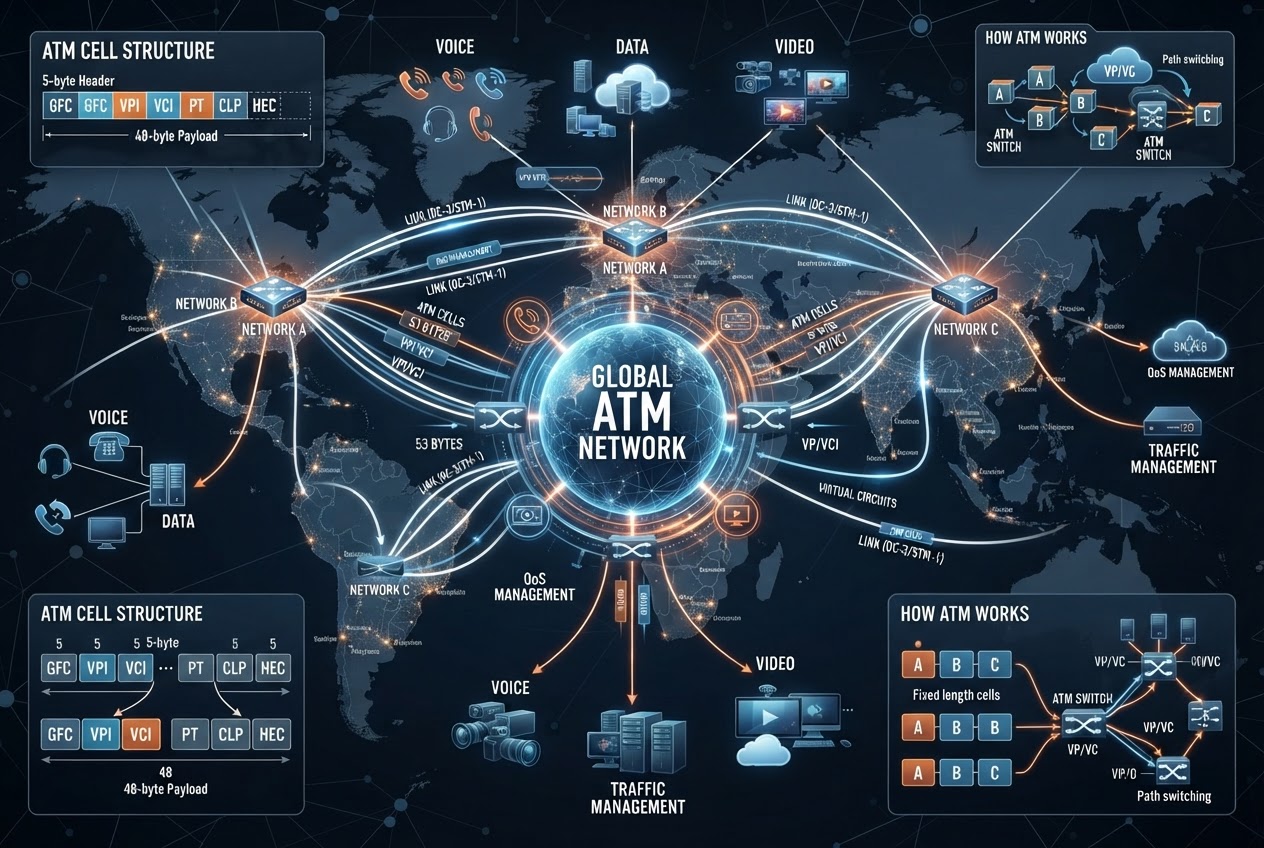
What Is an ATM Network?
An ATM network is a communication system that connects ATMs with banking institutions and payment processors. It facilitates transactions such as cash withdrawals, balance inquiries, fund transfers, and account deposits.
When a customer inserts a card and initiates a transaction, the ATM communicates with the bank's central processing system through the network to verify account information and authorize the request.
Key Components of ATM Networks
ATMs
These are the customer-facing devices that provide banking services. Modern ATMs support a wide range of functions beyond cash withdrawals, including deposits, bill payments, and cardless transactions.
Transaction Switches
Transaction switches act as routing engines that direct transaction requests between ATMs, banks, and payment networks. They ensure transactions are delivered accurately and efficiently.
Payment Networks
National and international payment networks connect multiple financial institutions, allowing customers to access services even when using ATMs operated by other banks.
Host Systems
Banks use host systems to manage account information, process transactions, and maintain customer records. These systems authorize or decline ATM requests based on account status and available funds.
Security in ATM Networks
Security is critical in ATM operations due to the sensitive nature of financial transactions. Financial institutions implement multiple layers of protection, including:
- End-to-end encryption
- PIN security standards
- Multi-factor authentication
- Real-time fraud monitoring
- Secure communication protocols
- Hardware security modules (HSMs)
These measures help prevent fraud, data breaches, and unauthorized access.
Emerging Trends in ATM Networks
Modern ATM networks are evolving to meet changing customer expectations. Key trends include:
- Contactless and cardless transactions
- Integration with mobile banking applications
- AI-powered fraud detection
- Advanced remote ATM management
- Enhanced customer personalization
These innovations improve customer convenience while strengthening transaction security.
Conclusion
ATM networks remain an essential component of the global financial ecosystem. As technology advances, financial institutions continue enhancing ATM infrastructure to deliver secure, efficient, and customer-centric banking experiences.